

The Pennsylvania Supreme Court ruled 4-3 that only a physician, not a member of his staff, must obtain “informed consent” from a patient before performing medical procedures.
Brain Surgery
In Shinal v. Toms, Dr. Steven Toms, the chief of neurosurgery at Geisinger in Danville performed surgery to remove a tumor in Megan Shinal’s brain. During the operation, Dr. Toms perforated Mrs. Shinal’s carotid artery, causing hemorrhage, stroke, brain injury, and partial blindness.
Montour County Malpractice Lawsuit
Megan sued for malpractice in Montour County claiming that had she known the alternative approaches to surgery, i.e., total versus subtotal resection, she would have chosen subtotal resection as the safer, less aggressive alternative. Dr. Tom’s procedure was more aggressive than Megan said she wanted and caused permanent injury. There was conflicting trial testimony about how aggressive Megan wanted the surgeon to be in attempting to remove as much of the tumor as possible. Although Megan spoke to the doctor before surgery, she had additional questions that were answered by the doctor’s assistant.
Trial Verdict for Doctor
The jury returned a verdict for the doctor but the Supreme Court ordered a new trial because it was Dr. Toms’ assistant who obtained the informed consent from Megan and not the doctor himself.
The Supreme Court’s Divided Opinion
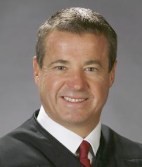
Justice David N. Wecht, writing for the majority, said doctors cannot delegate their obligation to obtain informed consent:
“…[W]e hold that a physician may not delegate to others his or her obligation to provide sufficient information in order to obtain a patient’s informed consent. Informed consent requires direct communication between physician and patient, and contemplates a back-and-forth, face-to-face exchange, which might include questions that the patient feels the physician must answer personally before the patient feels informed and becomes willing to consent. The duty to obtain the patient’s informed consent belongs solely to the physician.” Shinal v. Toms, No. 31 MAP 2016, 2017 Pa. LEXIS 1385, at *52 (June 20, 2017).
The Dissent
Justice Todd filed a concurring and dissenting opinion.
Justice Baer said he “respectfully but fervently” dissented, declaring that the law does not support the proposition that a physician’s qualified staff member was unable to obtain informed consent.
