

A 15-year-old Connecticut student at a private boarding school in Connecticut (The Hotchkiss School) sued her school in federal court after she contracted tick-borne encephalitis on an educational trip to China the school organized. A jury awarded her $41.75 million.
My first reaction to the headline, and maybe you share this view, was that the lawsuit was entirely frivolous. Many who read only headlines may believe the verdict was an indictment of the jury system. But, consider the facts before judging the outcome.
School Officials Knew of Danger
Prior to the student’s trip, one of the school’s employees, who provided the students traveling to China with information about the trip, viewed on the website for the United States Center for Disease Control and Prevention, information concerning travel to China.
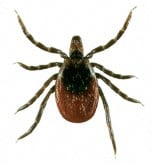
That information included a warning that tick-borne encephalitis occurred in the forested region of China where the students would be traveling and an instruction to travelers that the disease could be prevented by taking certain precautions to protect against insect bites.
Failing to Warn
The plaintiff claimed the school was negligent for failing to warn students going on the trip and their parents of the risk of exposure to tick-borne encephalitis, and by failing to ensure the students took protective measures against insect bites to prevent contracting that disease.
During the trip, the students visited a mountain in an area of China where the website reported that tick-borne encephalitis was present, and the school did not warn the students to take precautions to protect
against insect bites.

After the group of students ascended the mountain, the plaintiff and a small group of other students became lost in the woods when they were allowed to descend the mountain by themselves.
The plaintiff was bitten by insects and, ten days later, began to experience the first symptoms of tick-borne encephalitis.
Other students also became sick on the trip, but the plaintiff’s illness was the most severe.
According to the lawsuit, the trip leaders, who had no medical training, “did not appreciate the significance of the initial symptoms of the illness — which included total body paralysis, depressed levels of consciousness and seizures.”
15-year-old Permanently Brain-Damaged
The plaintiff suffered permanent brain damage and became seriously disabled. She lost control over some movement, lost problem-solving ability and is unable to speak. She has limited control over her facial muscles causing her to drool, to have difficulty eating and swallowing, and to exhibit socially inappropriate
facial expressions.Her condition is expected to worsen with age.
The federal trial court said dangerous insect bites were foreseeable and the school was obligated to warn parents.
But, the federal appeals court asked the Connecticut Supreme Court for an opinion on whether public policy in the state might somehow diminish the duty to warn.
School’s Duty to Warn of Known Dangers
The Connecticut Supreme Court ruled that the School had a duty to warn its students of dangers on the trip it knew about. “Because it is widely recognized that schools generally are obligated to exercise reasonable care to protect students in their charge from foreseeable dangers, and there is no compelling reason to create an exception for foreseeable serious insect-borne diseases, we conclude that the imposition of such a duty is not contrary to Connecticut public policy,” the Supreme Court said in a recent decision.
The Court said that the public policy of Connecticut does not preclude imposing a duty on a school to warn about or to protect against the risk of a serious insect-borne disease when organizing a trip abroad. Schools generally are obligated to exercise reasonable care to protect their students from foreseeable harms and this was a harm that school officials actually knew about. The standard the school was to follow was what a reasonable administrator should have done to protect her students.
Obviously, the jury thought the school officials failed miserably in their responsibility to this child.
An article appeared in the Hartford Courant, which will certainly be of interest.
Read the Second Circuit’s opinion, here.

Contact Stroudsburg Personal Injury Lawyers
Newman Williams
712 Monroe Street
Stroudsburg, PA 18360
Phone: 570-421-9090
Toll-Free: 800-506-0191
E-mail: [email protected]
